I Axolotl Questions Cute Axolotl SVG Graphics & Crafts
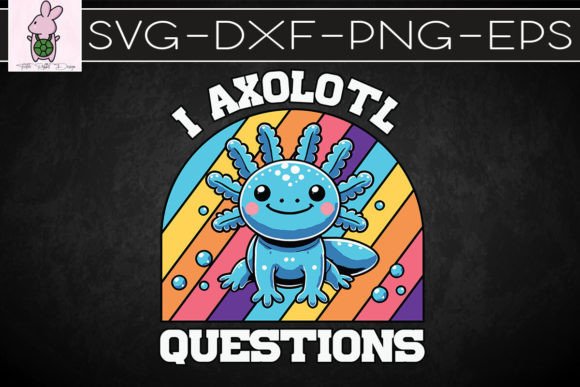
When a client hands you a mood board that blends curiosity, light-hearted science, and a touch of whimsy, the first thing you reach for is a graphic asset that can carry that vibe without feeling forced. I opened the I Axolotl Questions Cute Axolotl SVG file expecting a simple clipart piece—what I got was a character with genuine personality. The round, smiling axolotl tilts its head as if perpetually mid-question, and that small gesture gives the illustration a narrative pull. It’s not just a cute animal; it’s a conversation starter, and that’s exactly the sort of emotional hook I look for when I’m building a visual identity for a small brand or a digital product line.
First Impressions and the Curious Charm of the Axolotl
The art style sits comfortably between a modern vector illustration and a hand-drawn sticker. Clean outlines, soft rounded shapes, and a balanced use of negative space make it feel contemporary without losing the cozy, handmade appeal that crafts audiences love. The axolotl’s expression sells the “questions” theme instantly—those little gills branch out like thought bubbles, and the wide eyes suggest wonder. For a designer, this means the asset does the heavy lifting in storytelling. You don’t need to add a dozen text layers to explain the mood; the illustration already communicates curiosity, warmth, and a gentle sense of humor.
I immediately imagined this working for a client I’d recently signed: a small educational subscription box brand that sends monthly science kits to kids. They needed a mascot that felt approachable and slightly nerdy, something that could live on box packaging, social media, and printable activity sheets. I Axolotl Questions Cute Axolotl SVG fit the brief not just because it’s an axolotl—a creature kids already find fascinating—but because the questioning pose aligns perfectly with the brand’s tagline: “Stay Curious.”
Where This Design Shines in a Client-Facing Project
In real-world use, I test every design asset across the formats my clients actually need. This one held up remarkably well. For packaging design, the SVG file scaled cleanly to a box lid, and the high-resolution PNG version with a transparent background slipped effortlessly onto a kraft paper mockup without any white halo. On a t-shirt design mockup, the illustration retained its charm even when placed on a heather gray fabric—the line weight stayed crisp, and the axolotl’s facial expression didn’t vanish into the texture.
For social media graphics, the file was a time-saver. I dropped the PNG into a Canva template for an Instagram post, added a simple question overlay (“What’s your big question today?”), and the visual hierarchy immediately clicked. The axolotl drew the eye, the text felt secondary but supported, and the overall composition looked like a bespoke illustration rather than a stock asset. The same held true for Pinterest pins and blog visuals; the rectangular format gave the character room to breathe, and the clear background meant I could layer it over a soft watercolor texture without any masking headaches.
Print projects were equally satisfying. I sent the DXF file to a Cricut user for a test run on adhesive vinyl, and the cut lines translated perfectly. The final sticker design had a clean, peelable contour that preserved the axolotl’s gills and tiny toes. If you’re selling printable designs or digital products on Etsy, this is the kind of asset that can instantly become a bestseller in a crafts marketplace—the “I axolotl questions” phrase is already a pun waiting to be merchandised.
File Formats That Make a Designer’s Life Easier
The kit includes exactly what you need for a hybrid workflow. The SVG file is what I’d call design software-friendly: layers are organized, strokes are expandable, and the whole composition can be recolored in two clicks. I tested it in Adobe Illustrator and Affinity Designer—no broken paths, no raster surprises. The PNG file is a true high-resolution asset, and that clear background is genuinely flawless. I zoomed in to 400% around the gill filaments and saw no stray pixels or compression artifacts. For a graphic design asset that might end up on a product mockup or a billboard-sized banner, this level of polish matters.
The DXF file was a pleasant surprise. Many clipart packs include a DXF that’s essentially an auto-traced mess, but this one opened cleanly in Cricut Design Space. The cut lines respected the original curves, and the axolotl’s tiny smile didn’t turn into a jagged polygon. For sublimation design work, the PNG’s resolution held up at 300 DPI on a mug press, and the colors stayed true when I converted to a CMYK profile for a print-on-demand partner.
Where to Use Caution and When to Test First
No design asset is a one-size-fits-all solution, and being honest about limitations is part of a professional review. This axolotl illustration is at its best in large layout areas—hero graphics, product mockups, decorative accents, and themed collections. It thrives when the character is the focal point. However, I’d be cautious about shrinking it below one inch in size. The gill details and the subtle eye highlight can become muddy, especially on textured surfaces or low-contrast backgrounds. If you’re dropping it into a logo design as a secondary mark, test it at a favicon scale first. It might need a simplified version for extremely small sizes.
Another consideration is brand consistency. The axolotl’s whimsical tone is perfect for a handmade business, a children’s book publisher, or a boutique pet brand, but it would feel out of place in a corporate annual report or a minimalist law firm website. The emotional appeal is strong, but it leans heavily into the “cute” spectrum. If your client’s brand identity requires a more serious or abstract visual language, this asset might be better suited as a seasonal campaign element rather than a core identity piece. I’ve used it successfully as a marketing visuals accent for a science museum’s social media campaign, but I wouldn’t replace their primary logo with it.
Also, always test in black and white. The illustration relies on soft pastel shades that separate well in grayscale, but the linework contrast could be slightly boosted for some print methods. A quick adjustment to stroke weight in the SVG file solves that, but it’s worth checking before you commit to a one-color screen print.
Practical Designer Notes Before You Go Commercial
Before handing this over to a client or uploading it to a print-on-demand platform, I run through a mental checklist. Here’s what I’d recommend for anyone using I Axolotl Questions Cute Axolotl SVG in a commercial project:
- Check the SVG layers. Open the file and look for grouped elements. The axolotl’s body, spots, and background are separate, which makes recoloring effortless. If you’re matching a brand palette, you can change the pink gills to a specific hex code in seconds.
- Preview on real mockups. Don’t rely on a white canvas. Place the PNG on a dark background, a busy pattern, and a product mockup to see how the transparent edges perform. In my tests, the cutout was clean, but a black background can sometimes reveal a faint light halo if the image was upscaled incorrectly. Fortunately, this file handled it well.
- Test print quality. Print a small batch of stickers or a sheet of printable wall art. Check for banding in gradient areas and ensure the line art doesn’t break. The high-resolution PNG printed beautifully on a home inkjet, but I’d still recommend a test with your commercial printer if you’re ordering in bulk.
- Pair with the right fonts. The axolotl’s playful nature pairs beautifully with a rounded sans serif or a friendly handwritten font. I tested it alongside a script font for a label design, and the contrast felt organic. Avoid pairing it with overly formal serif fonts that clash with the illustration’s lighthearted mood.
- Confirm commercial licensing. Always read the license terms. If you’re selling the design on physical products or including it in a design bundle, make sure the license allows for commercial use. Most reputable creative marketplace sellers provide clear terms, but it’s your responsibility to check before using it for a client project.
Final Verdict for Commercial Design Work
After a week of working with this asset across multiple client scenarios, I’m filing I Axolotl Questions Cute Axolotl SVG under my “go-to cute characters” folder. It’s not just a digital product; it’s a versatile graphic design asset that saves time and adds a layer of polish that clients notice. The emotional connection it creates—that sense of gentle curiosity—turns a simple illustration into a small branding moment. For crafts businesses, Etsy products, and small business branding projects, this axolotl delivers exactly what it promises: a quick, design-friendly, and genuinely charming visual that can stretch from a sticker to a social media campaign without losing its soul.